.jpg?fit=max&auto=format&n=E2LlsT5gBITvo732&q=85&s=ec11e1673894bdf46663a5d73602eb87)
Installing WordPress
To install WordPress using the WP Toolkit, follow these steps:- Log in to cPanel.
📘 Note If you do not know how to log in to your cPanel account, please see this article.
- On the Tools page, in the Domains section, click WP Toolkit:\
- The WP Toolkit page appears. Under Installations, click Install:\

- Under Choose installation options, customize your site:
- Under General, in the Installation path text box, you can optionally specify a directory in which to install WordPress.
👍 Tip If you want your domain name (for example, https://www.example.com ) to go directly to WordPress, make sure the Installation path text box is blank.
- In the Website title text box, specify the title of your site.
- In the Plugin/theme set list box, you can optionally select a package of plugins and themes to install.
- In the Website language list box, select the language for the site.
- In the Version list box, select the WordPress version you want to install.
📘 Note Unless you have a specific reason for not doing so, you should install the current version.
- Under WordPress Administrator, in the Username text box, type the username you want to use to log in to the site.
- In the Password text box, type the password you want to use for the username to log in to the site. Click the eye icon to view the password.
🚧 Important Make sure that you use a strong password! Alternatively, you can click Generate , and cPanel generates a strong, random password for you.
- In the Email text box, type a valid e-mail address. This address is used to receive update notifications and other news.
- Under Database, you can optionally change the database settings.
📘 Note The database options are for advanced users. You do not need to change any of them unless you have a specific reason for doing so.
- Under Automatic Update Settings, you can optionally change the settings for WordPress, plugin, and theme updates.
📘 Note You do not need to change any of these settings unless you have a specific reason for doing so.
- Under General, in the Installation path text box, you can optionally specify a directory in which to install WordPress.
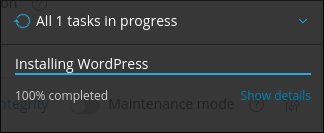
- Click Install. cPanel begins the installation and provides a progress indicator:\
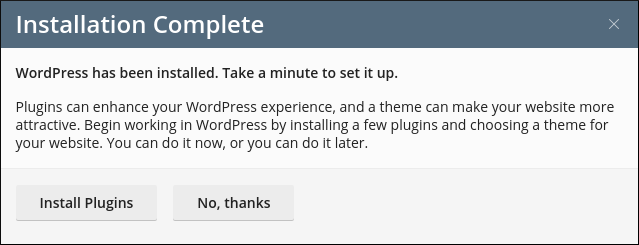
- After installation is complete, you can optionally install plugins:\
- Now that WordPress is installed, you can use the WP Toolkit to help manage your site. For information about how to do this, please see this article.
More information
- For more information about the cPanel WP Toolkit, please visit https://www.cpanel.net/wp-toolkit.
- For more information about WordPress, please visit https://wordpress.org.