.jpg?fit=max&auto=format&n=E2LlsT5gBITvo732&q=85&s=ec11e1673894bdf46663a5d73602eb87)
About CloudLinux
The CloudLinux operating system provides several useful features, including: All shared, reseller, and Turbo hosting accounts are on servers running CloudLinux. For managed VPS and managed Dedicated servers, the situation is a bit more complicated:- For managed VPS and Dedicated server accounts activated in May 2023 or after, CloudLinux is installed.
- For managed VPS and Dedicated server accounts activated before May 2023, CloudLinux is not installed.
Method #1: Use cPanel
To use cPanel to determine if your account is running on CloudLinux, follow these steps:-
Log in to cPanel.
📘 Note If you do not know how to log in to your cPanel account, please see this article.
-
On the Tools page, in the right sidebar, click Server Information:

-
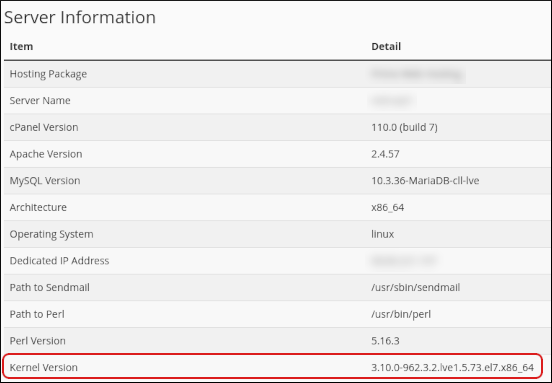
Locate the Kernel Version row:
-
If the kernel version contains lve, then the server is running CloudLinux. For example, the following server is running CloudLinux:

👍 Tip Alternatively, on the Tools page, in the Software section, look for any of the following icons:
-
Setup Node.js App:

-
Setup Python App:

-
Select PHP Version:

-
Setup Node.js App:
Method #2: Use WebHost Manager
To use WebHost Manager (WHM) to determine if your account is running on CloudLinux, follow these steps:-
Log in to WebHost Manager.
📘 Note If you do not know how to log in to your WebHost Manager account, please see this article.
-
The operating system version appears on the top banner. For example, the following server is running CloudLinux:

-
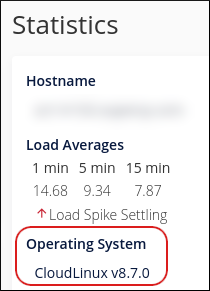
Alternatively, look in the Statistics sidebar:
Method #3: Use the command-line interface
If you want to use the command-line interface to determine if your account is running on CloudLinux, follow these steps:- Log in to your account using SSH.
-
At the command prompt, type the following command:
-
If the kernel version contains lve, then the server is running CloudLinux. For example, the following output indicates that the server is running CloudLinux: